
Sitesphere
The end to end workflow for field electricians' jobs
“Managing electricians in the field now only takes a few clicks rather than a hundred phone calls.”
Introduction
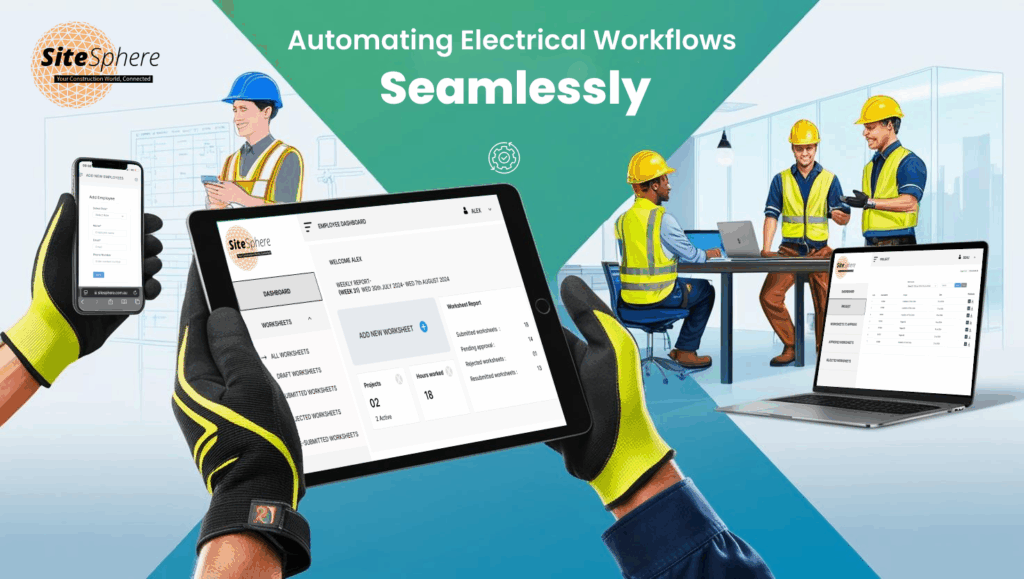
At Lichivi, I led the UX strategy design, and tech delivery for Sitesphere, a smart automation platform tailored for the construction and trade industries. The project focused on simplifying how businesses manage jobs, certifications, and compliance through a unified, cloud-based system. I oversaw the design direction, workflow mapping, and interface consistency across the platform to deliver a seamless user experience that connected field operations with back-office efficiency.
The process
Discovery
Research on the current process
Discovery combined interviews, current process mapping and artefact study. The central artefact was the manual worksheet every electrician fills in on the job. It has to be signed by the client supervisor and the end client, then manually submitted with all the additional costs in the job to the payroll department, who verifies the job before a next-level admin finalises it and releases pay. Interviews with electricians, payroll staff and admins traced each handoff, and mapping the process end to end showed a two week gap between finishing a job and being paid for it.
Current state user journey map · before
The before journey, from job assignment to wage release. Six manual handoffs, roughly two weeks end to end.
How might we exercise
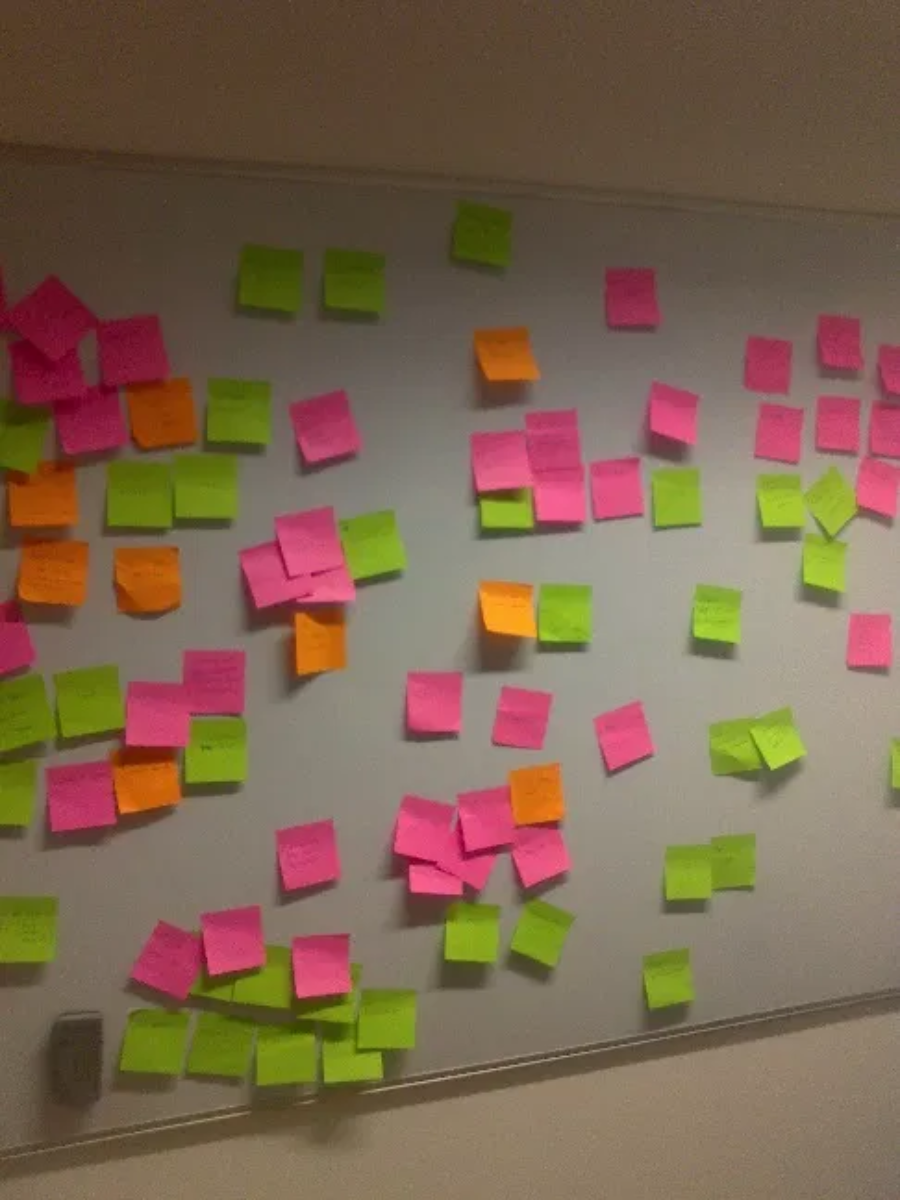
Synthesis workshops with stakeholders turned the pain points into How Might We questions, then dot-voted them into a focused set that framed the define phase.
Define the problem
The problem was defined around the wage release bottleneck. A finished job took roughly two weeks to become pay because every step, worksheet, signatures, cost submission, verification and finalisation, moved by hand. The redesigned core flow captures everything once, on site, and lets each downstream role act on the same record.
User flow · job to pay
Conceptualisation
Future state journey map · after
The after journey. The same six stages collapse into one continuous digital thread, and the two weeks become 72 hours.
Sprint planning & agile delivery model
Design ran one sprint ahead of engineering in a dual-track agile model. Discovery work validated concepts while delivery sprints shipped the previous track's designs. Each two-week sprint closed with a design review, a usability checkpoint and backlog grooming with product and engineering, so design decisions arrived tested rather than debated.
Concepts, prototypes, validation
Specced, tested, accessible
Build, QA, release
Ideation, mock-ups, testing & delivery
Final ideation converged the validated concepts into high-fidelity mock-ups. Moderated testing ran with supervisors and office staff on real job data, and each release phase shipped behind the same loop: design, test on site, refine, release.
Concept sketches to hi-fi
Built from the library
On-site, real job data
Release by roadmap phase
Result
Less paperwork on site. More visibility in the office.
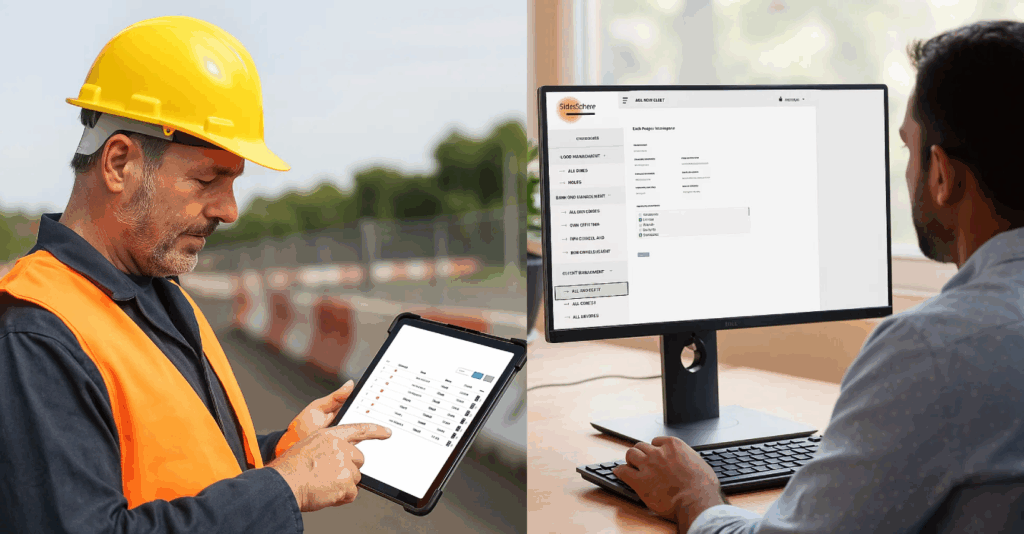
The workflow automation now covers 12 electricians on the job, taking the process from job assignment to wage release from two weeks down to 72 hours.
One shared record from worksheet to wage release keeps field and office aligned, so the platform scales across project networks without process debt.