
Real estate teams drown in repetitive enquiries while customers wait for answers they needed instantly. I designed an AI chatbot that answers listing and suburb questions on the spot, qualifies intent, books inspections, and routes complex cases to the right team with full conversation context.
Project brief
Deliver an AI chatbot that answers listing and suburb questions instantly, qualifies buyer, seller and tenant intent, books inspections and callbacks, captures documents and application requirements, and routes complex cases to the right team with full conversation context.
Client type
Mid-sized real estate agency group: a sales team for buyers and sellers, a leasing team for tenants and applications, property management for maintenance and ongoing requests, and existing CRM and listing platforms.
My role
The problem
Customers had to call during business hours, fill long forms with unclear outcomes, and repeat details across multiple teams.
Teams manually answered repetitive questions, chased missing details, and lost leads to slow response and poor routing.
The process
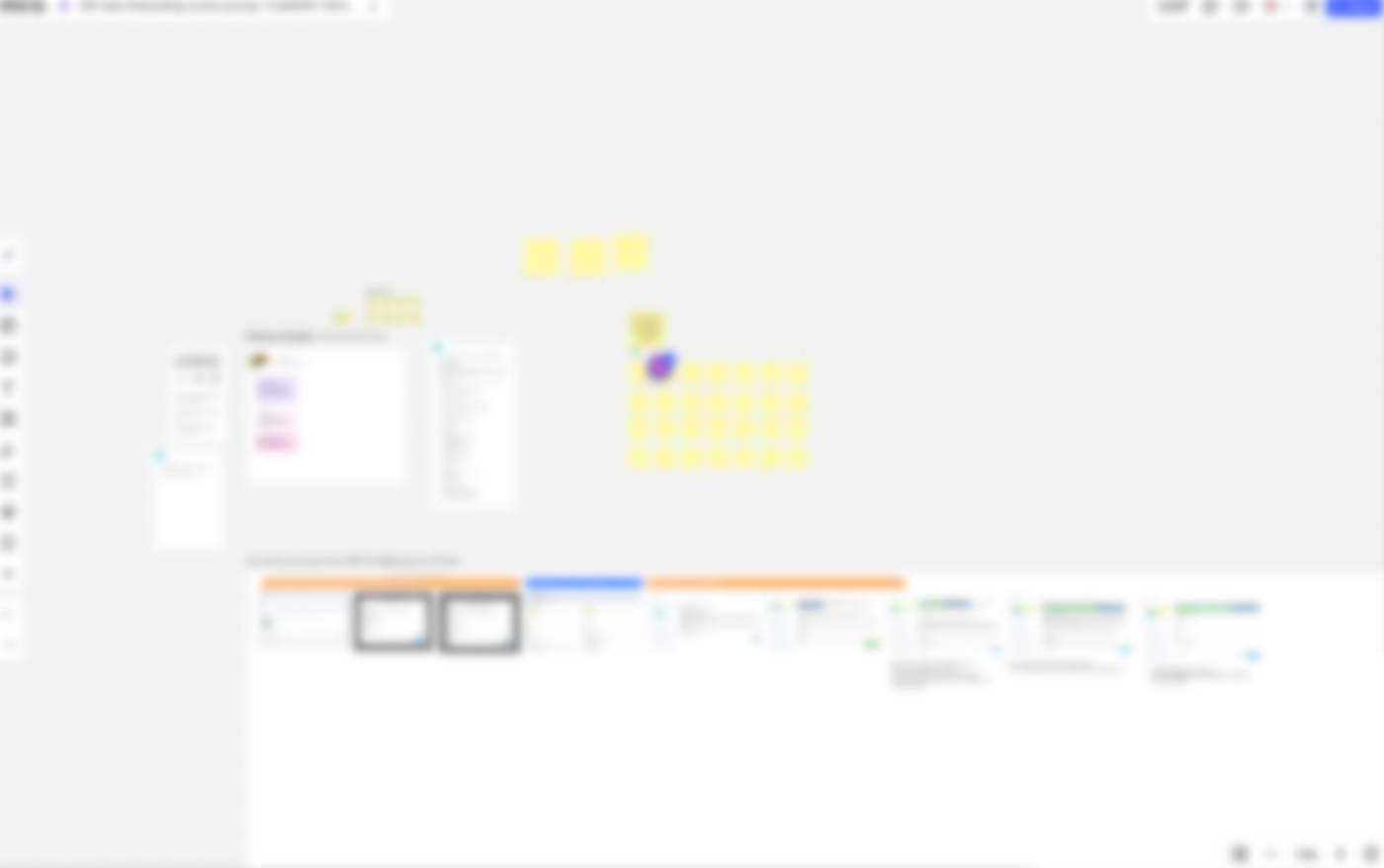
1.1 Insight-to-strategy synthesis map
Discovery phase
A kick-off workshop with key business stakeholders mapped existing enquiry workflows, operational constraints and desired outcomes, defining success metrics, scope boundaries and shared assumptions around automation, human handover and compliance. Key user groups were identified early: buyers, sellers seeking appraisals, rental applicants, existing tenants, sales agents, leasing agents and property managers.
Secondary research across enquiry logs, form submissions, call centre transcripts, CRM data and listing analytics surfaced the most frequent, high-impact enquiries suited to conversational AI. One-on-one interviews with customer-facing staff uncovered where delays occur and which interactions need human judgment, moderated usability tests with early conversational prototypes revealed how users perceive trust, clarity and control in a chatbot.
A competitor scan across property portals, banking and support automation examined conversation structure, escalation patterns and tone of voice, locating the opportunities for differentiation that shaped the next phase.
Define & conversation architecture
Research findings were clustered into recurring patterns and mapped against business objectives to decide what to automate, what needs a human, and where a hybrid approach best supports trust. Problem statements and “How might we” questions focused the direction: faster responses to high-volume enquiries, better lead qualification, less repetitive agent work.
Personas for buyers, sellers, rental applicants, tenants and internal staff captured goals, anxieties and decision triggers, especially the moments of uncertainty where users abandon or escalate. End-to-end conversational journeys documented intents, system responses, decision points, fallbacks and escalation paths.
The functional scope defined core intents and sub-intents, entry points across web and mobile, confidence thresholds for intent recognition, escalation criteria and error-recovery paths, anchored by conversational design principles for tone, response length, confirmation patterns and transparency cues. The phase closed with a validated experience blueprint signed off by stakeholders.
Conversation design & UX architecture
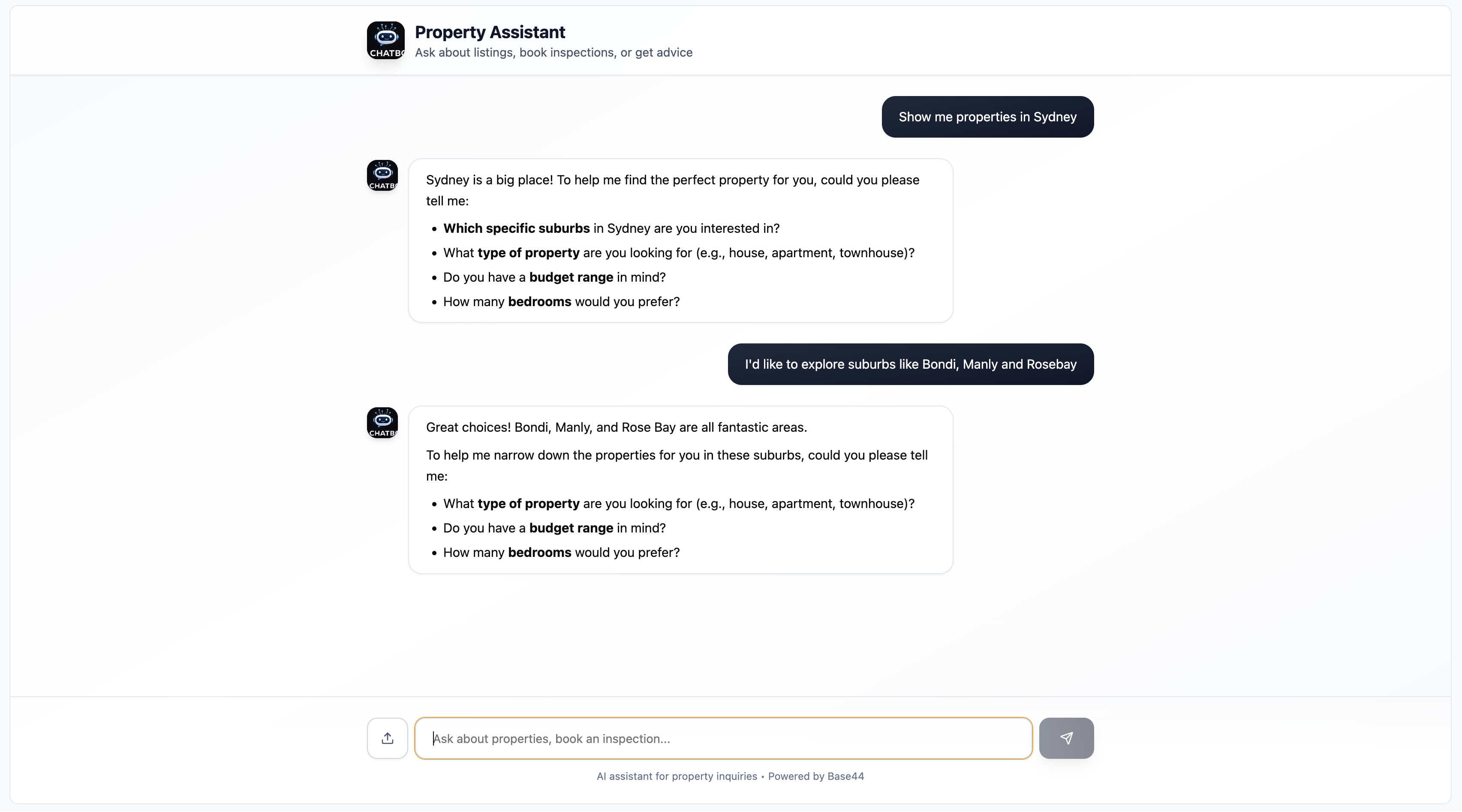
The high-level conversation architecture mapped primary intents, sub-intents, decision points and fallback paths for each user group, how users enter, how intent is identified, how the system responds, and when it hands over to a human. Users can always move forward without feeling trapped in a scripted flow.
Detailed flows covered buyer enquiries, inspection bookings, appraisal requests, rental application support and maintenance requests, each built on progressive disclosure, asking only the minimum at each step. Trust cues such as confirmations, summaries and optional human handover were built in deliberately.
The UI work produced a clean, accessible chat interface across desktop and mobile with reusable components: quick replies, information cards, booking modules, document upload states and handover indicators.
Prototyping & UI design
Clickable and conversational prototypes simulated realistic interactions across the key use cases: intent recognition and branching paths, context-aware responses, inspection booking flows, lead qualification summaries and escalation to human agents.
These validated conversation length, question sequencing and response clarity early, with particular attention to error states, unclear inputs and edge cases so the chatbot recovers gracefully. Cross-functional reviews with product, engineering and operations aligned feasibility before formal testing.

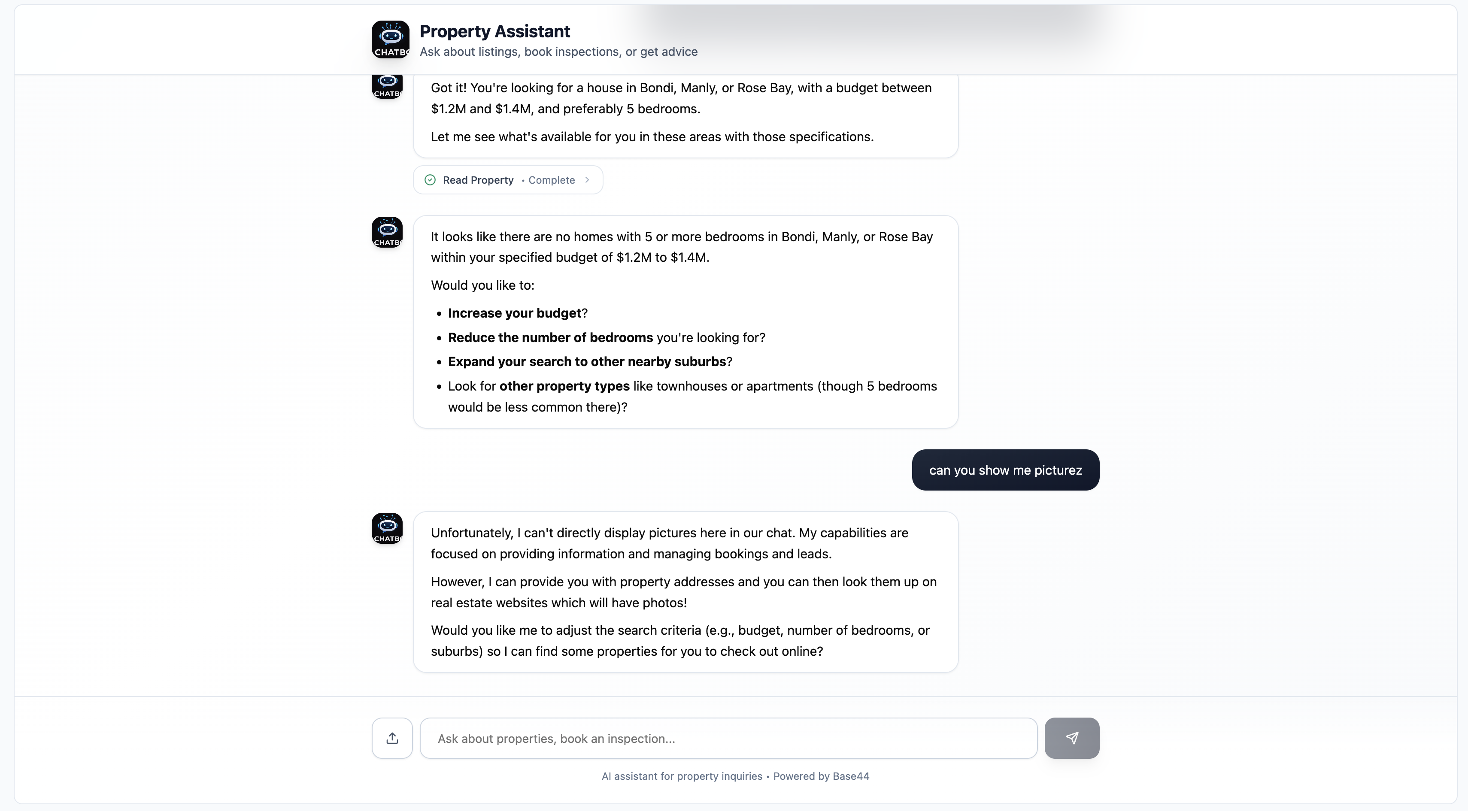
Buyer · pre-auction terms · 8/22 Kent St · finance approved
Testing & iteration
Moderated sessions with buyers, sellers, renters and tenants worked through realistic tasks, enquiring about a property, booking an inspection, requesting an appraisal, reporting maintenance, recorded and analysed for language patterns, hesitation points and emotional response.
Findings drove simpler language, fewer questions in key flows, and clearer visibility of booking confirmations and handover options. Multiple iterations were re-tested until task completion sped up, confidence rose and drop-off fell.

Build & handover
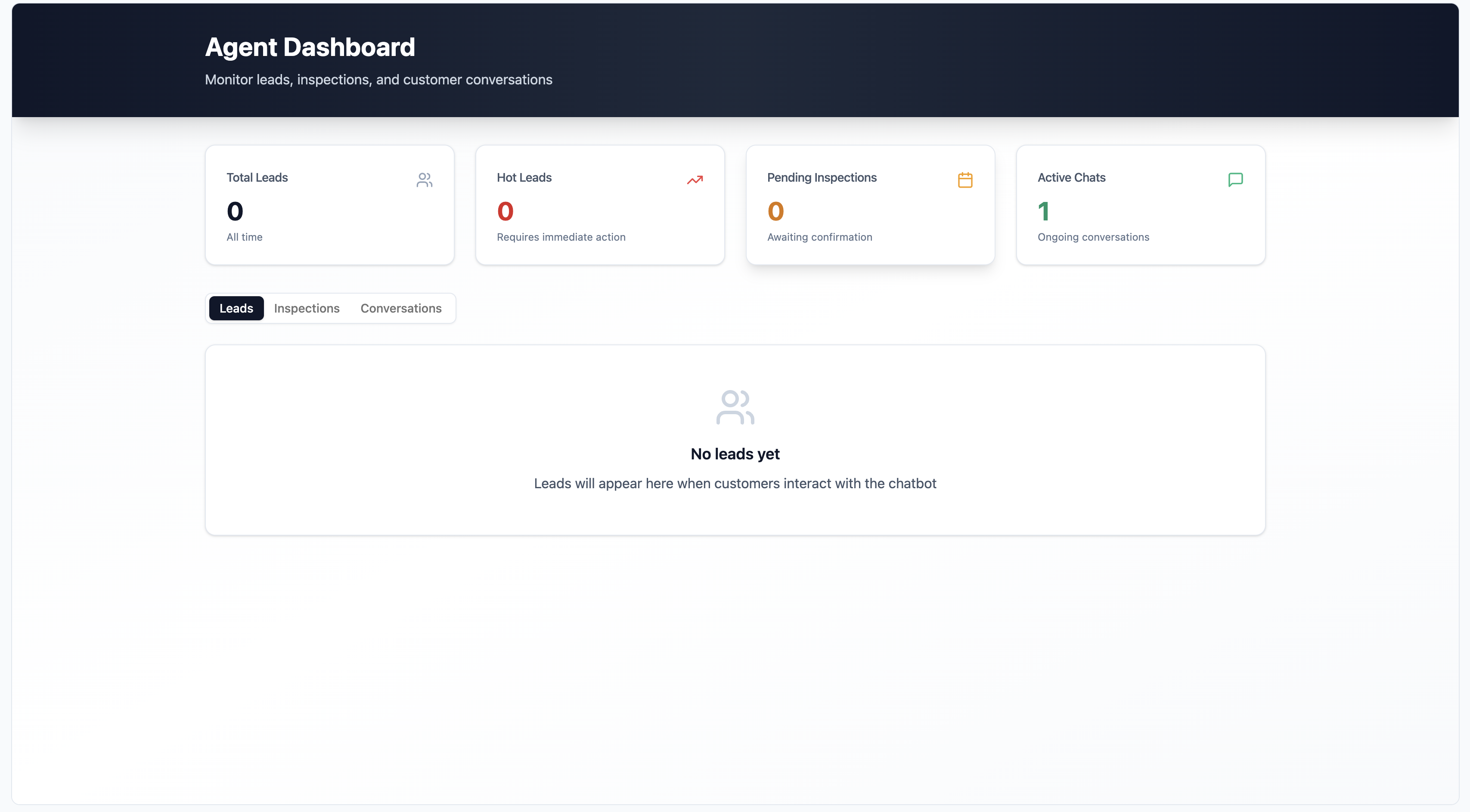
Handover documentation covered conversation logic, intent definitions, escalation rules, UI component specs and analytics requirements. I worked with engineers on CRM, booking-tool and property-management integrations, including how conversation summaries and lead data should be structured so agents receive meaningful context at handover.
Success metrics, intent completion rates, booking conversions, escalation frequency and post-interaction satisfaction, enable continuous optimisation post-launch.